If you’ve ever hit the gym and wondered how to effectively target the back of your thighs, the prone leg curl machine is a staple piece of equipment you need to master. While most people know it works the "hamstrings," the reality is a bit more nuanced.
In this article, we’ll break down exactly which muscles the prone leg curl machine targets, how it differs from other leg curl variations, and why it should be a part of your lower body workout routine.
The Primary Target: The Hamstring Complex
Secondary Muscles Worked (Synergists)
Prone vs. Seated vs. Standing Leg Curls: What's the Difference?
The Benefits of Adding Prone Leg Curls to Your Routine
Tips for Proper Form
Conclusion
The Primary Target: The Hamstring Complex
The short answer to the question is: the hamstrings. But this isn't just one muscle; it's a group of three muscles located on the posterior (back) aspect of your thigh. When you perform a prone leg curl, you are primarily working:
- Biceps Femoris:This is the largest of the hamstring muscles. It has two heads (long and short) and is located on the outer side of the thigh. It plays a major role in knee flexion and hip extension.
- Semitendinosus:Located on the inner side of the thigh, this muscle helps with knee flexion and also contributes to the medial rotation of the lower leg.
- Semimembranosus:Also located on the inner side of the thigh, beneath the semitendinosus, it aids in knee flexion and stability.
How it works: When you lie face down (prone) on the machine and bend your knees to bring your heels toward your glutes, you are performing "knee flexion." This is the primary function of the hamstring group.
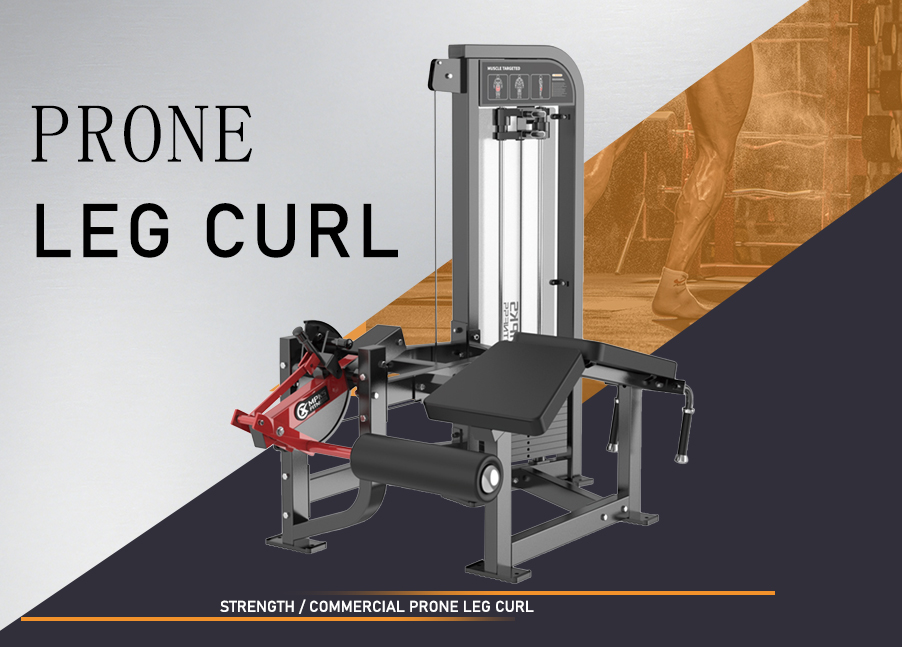
Secondary Muscles Worked (Synergists)
While the hamstrings do the heavy lifting, several other muscles act as synergists (helpers) to stabilize the joint and assist in the movement:
- Gastrocnemius (Calf Muscle):The upper part of your calf muscle crosses the knee joint and assists slightly in bending the knee.
- Plantaris:A small, often overlooked muscle behind the knee that also assists in knee flexion.
- Popliteus:This small muscle located behind the knee joint helps to "unlock" the knee by rotating the femur (thigh bone) during the initial phase of flexion.
Prone vs. Seated vs. Standing Leg Curls: What's the Difference?
You might be wondering why you should choose the prone (lying face down) version over the seated or standing versions. The difference lies in the position of your hips and the subsequent activation of the muscles:
- Prone Leg Curl:In this position, your hips are extended (straight). This position puts the hamstrings in a slightly shortened state at the hip, which can lead to greater activation of the distal (lower) fibers of the hamstrings near the knee. It is also generally considered the safest for the lower back.
- Seated Leg Curl:In this position, your hips are flexed (bent). This stretches the hamstrings over the hip joint, which can lead to greater activation of the proximal (upper) fibers near the glutes. However, if you have lower back issues, the seated position can sometimes cause discomfort due to the stress on the lumbar spine.
- Standing Leg Curl:This version requires more core stability and balance. It allows for a greater range of motion and often feels more functional, but it can be harder to load heavy weights safely.
The Benefits of Adding Prone Leg Curls to Your Routine
Incorporating the prone leg curl machine into your workouts offers several key benefits:
- Isolation:Unlike compound movements like deadlifts or squats, the leg curl machine isolates the hamstrings. This is perfect for correcting muscle imbalances (e.g., if your quads are stronger than your hamstrings) or for targeting the hamstrings specifically for growth.
- Lower Back Safety:For those with herniated discs or lower back pain, the prone position is often the most comfortable way to train the hamstrings without putting compressive force on the spine.
- Improved Knee Stability:Strong hamstrings act as a brake for the knee joint. Weak hamstrings are a common cause of knee injuries (like ACL tears). Strengthening them helps stabilize the knee during dynamic movements like running and jumping.
- Functional Strength:The ability to bend your knees is essential for everyday activities like walking, climbing stairs, and getting up from a chair.
Tips for Proper Form
To get the most out of the prone leg curl machine and avoid injury, follow these tips:
- Adjust the Pad:Ensure the pad is positioned on your lower leg (ankle area), not on your Achilles tendon or your shin.
- Keep Hips Down:Do not lift your hips off the bench as you curl your legs up. This shifts the focus away from the hamstrings and onto the lower back.
- Control the Eccentric:Lower the weight slowly (over 2-3 seconds) rather than letting it drop. The lowering phase is where the most muscle growth occurs.
- Squeeze at the Top:Pause for a second at the top of the movement and squeeze your hamstrings before lowering.
Conclusion
The prone leg curl machine is a highly effective tool for building strength and size in your hamstrings (biceps femoris, semitendinosus, and semimembranosus).
Whether you're a bodybuilder looking to add mass to the back of your legs or a fitness enthusiast looking to improve overall leg strength and knee health, the prone leg curl is a must-do exercise. So next time you're at the gym, skip the crowded squat rack for a minute and give this machine a try!


