Primary Muscles Targeted: The Quadriceps Femoris
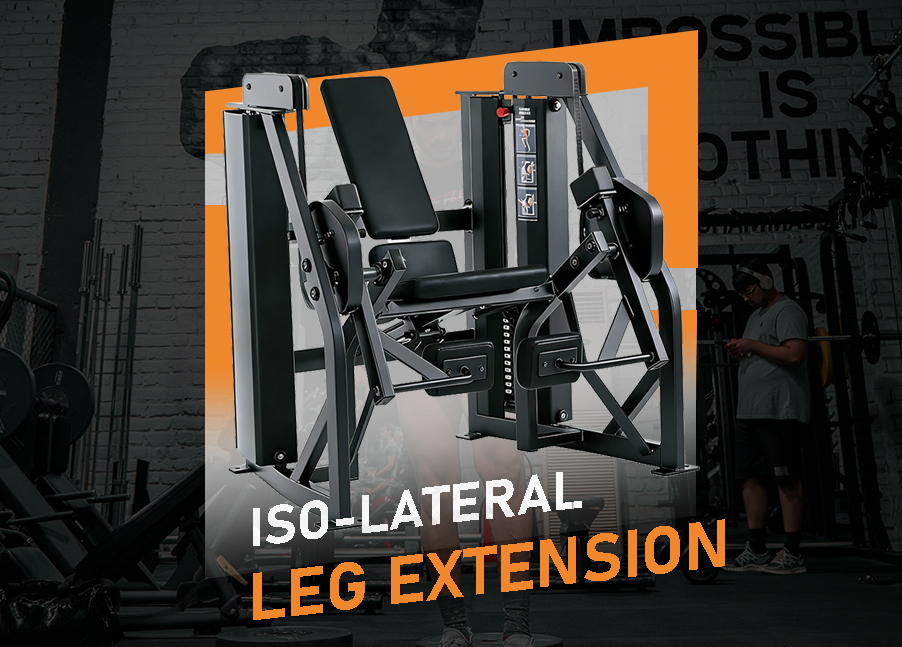
The machine’s core purpose is isolating and strengthening the quadriceps femoris (front of the thigh), a group of four muscles that work together to extend the knee. Its iso-lateral design ensures each muscle gets focused tension:
-
Rectus Femoris: The superficial central thigh muscle, crossing hip and knee joints. It drives explosive knee extension, critical for sprinting and jumping.
-
Vastus Lateralis: Outer-thigh muscle that stabilizes the knee. Independent movement prevents the stronger leg from compensating, promoting balanced development.
-
Vastus Medialis: Inner-thigh “teardrop” muscle, key for knee stability. The machine targets it effectively to correct weakness and boost symmetry.
-
Vastus Intermedius: Deep muscle between the lateral and medial vastus, supporting knee extension. Controlled movement ensures full engagement.
These four muscles drive the movement, with the iso-lateral design eliminating compensation from other groups.
Secondary Muscles Engaged: Stabilizers and Assistors
While quadriceps are primary, secondary stabilizer muscles support form and joint protection:
-
Glutes and Hamstrings: Minimal engagement, acting only to stabilize hips and legs—unlike compound exercises, ensuring pure quad isolation.
-
Knee Joint Stabilizers: Small muscles/tendons (e.g., patellar tendon) support the knee. The machine’s 4-degree outward arm angle follows natural knee alignment, reducing strain.
-
Hip Flexors: Slightly engaged to anchor hips to the seat, keeping focus on quadriceps.
Key Features Enhancing Muscle Targeting
The machine’s unique features optimize engagement, correct imbalances, and boost safety, setting it apart from traditional models:
1. Independent Leg Movement
Split-arm design lets each leg move independently, eliminating stronger-leg compensation. This corrects imbalances, benefiting injury-recovering athletes, those with uneven strength, and symmetry seekers.
2. Ergonomic, Joint-Friendly Design
A 4-degree outward arm angle aligns with natural knee movement, reducing patellar tendon strain. Adjustable seats/pads fit all sizes, maintaining proper biomechanics and quad engagement.
3. Isolation Capability
Unlike compound exercises (squats, leg presses), it isolates quadriceps—ideal for hypertrophy, strength, and rehabilitation. It also enhances mind-muscle connection for controlled reps.
4. Adjustable Resistance and Range Limiter
Plate-loaded resistance suits all fitness levels. A range limiter allows precise movement control, perfect for knee injury recovery with short-arc training.
Who Benefits Most?
The machine suits all fitness levels:
-
Athletes: Builds explosive quad strength for sprinting, jumping, and direction changes.
-
Rehabilitation Patients: Controlled movement and range limiter enable safe, gradual strength building post-injury/surgery.
-
Bodybuilders: Sculpts defined quadriceps (especially the “teardrop” muscle) for symmetry.
-
General Fitness Enthusiasts: Improves lower body strength, knee stability, and functional fitness for daily activities.
Proper Form Tips
Follow these guidelines to maximize engagement and avoid injury:
-
Adjust the seat so knees align with the pivot, and the leg pad rests above the ankle.
-
Secure the seat belt (if available) to anchor hips and focus on quadriceps.
-
Grasp side handles, engage your core, and keep your lower back pressed to the backrest.
-
Slowly extend legs (no knee locking) using only quadriceps.
-
Pause at the top, then lower slowly to a 90-degree knee angle (don’t let weights touch down).
-
Avoid momentum—control movement to keep quadriceps engaged.
Conclusion
The iso-lateral leg extension machine precisely targets the quadriceps (rectus femoris, vastus lateralis, medialis, intermedius). Its iso-lateral, ergonomic design and isolation capability make it superior for growth, strength, imbalance correction, and rehabilitation. With proper form, it builds stronger, more symmetrical lower body muscles.


